|
|
Electromechanical Protection: Relies on a zero-sequence current transformer to detect leakage current, triggering a mechanical trip mechanism to cut off power.
|
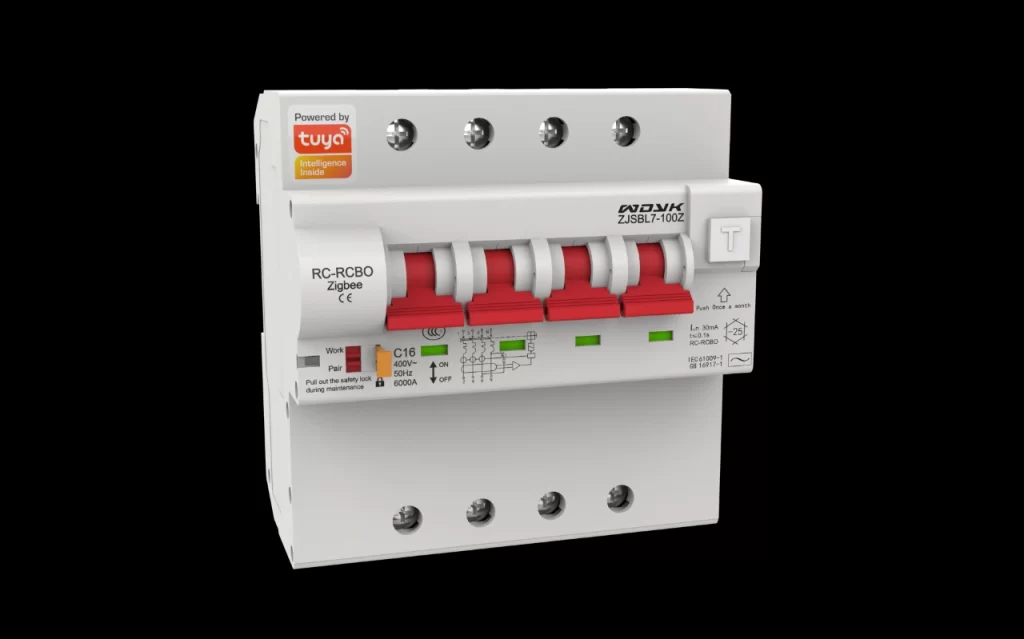
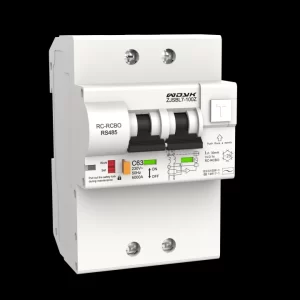
Integrated Smart Protection: Builds upon the protection module by integrating a Zigbee wireless communication module and a microprocessor (MCU).
|
|
|
Basic Leakage Protection: Automatically trips when leakage current exceeds the preset threshold (e.g., 30mA).
|
Basic Protection + Smart Warning: Besides tripping, it can monitor and report the real-time leakage current value. It provides early warnings before reaching the dangerous threshold.
|
|
|
Local Indication Only: Typically has only a mechanical indicator (handle position) showing “ON/OFF” status.
|
Full Status Remote Visibility: Allows remote, real-time viewing of trip status, residual current value, voltage, current, power, and other comprehensive electrical parameters.
|
|
|
Purely Local Manual: Requires manual reset and switching at the distribution panel.
|
Local + Remote Control: Enables remote reset, switch-on/off via a mobile app or cloud platform.
|
|
|
None: If a trip occurs with no one present, it goes unnoticed, and the fault may persist.
|
Real-time Active Alerts: Immediately sends alerts via app push notifications or SMS upon tripping or abnormal leakage detection, precisely identifying the specific breaker.
|
|
|
Information Silo: Cannot communicate with other systems.
|
IoT Node: Functions as a Zigbee network node, easily integrating with smart home platforms or Building Energy Management Systems (BMS/EMS) for automated actions.
|
|
Maintenance & Diagnostics
|
Reactive & Inefficient: Requires manual, on-site troubleshooting with no historical fault data recording.
|
Proactive & Efficient: Logs trip times and leakage values for easier fault analysis. Supports remote inspection, significantly reducing maintenance costs.
|
|
|
Homes, shops, factories—anywhere basic personal shock protection is required.
|
Scenarios demanding higher safety and management, such as rental apartments, data centers, chain stores, smart buildings, senior living facilities, and any scenario requiring centralized remote power management.
|